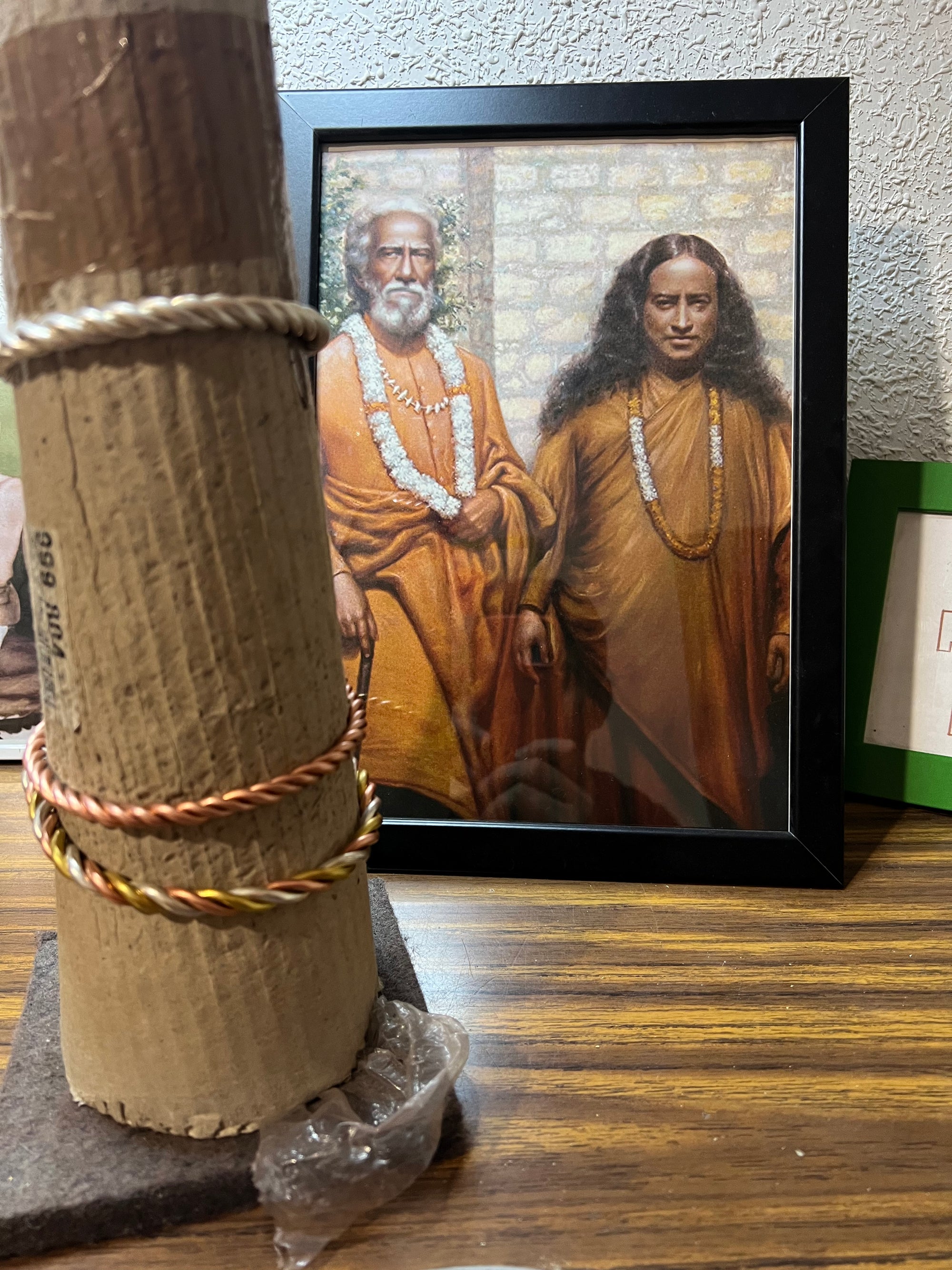


Hundreds of years before #Yogananda made #yogabracelets popular and recommended them to his disciple Janakananda, the Celts crafted very similar bracelets called torcs (torques, due to the twisted wires) during the Bronze Age (1000 to 300 BC).
Although usually made of gold, copper, and bronze, they wore them on the neck, above the elbow, or on their wrists (similar to those from Mohenjo-Daro, Pakistan, between 2600 and 1800 BC) as decorative elements, for protection, and associated with the immortality of the soul.

(image of the Burela Torque, 3rd-2nd century BC, gold, 1812g)
The Germanic, Persian, Breton tribes, and of course the Celts used torcs and included them in depictions of the gods in their mythology.

(image of a Roman military torque, bronze, 1st century BC)
Later, the Romans used torcs as distinctive military decorations, which adapted over time, even hanging them from their attire.
It’s incredible to find such a clear connection between our culture and yoga, represented in the #yogabracelets.